However, the promise of openness is often ambiguous. For example, what does it mean in the context of global governance? Should it be horizontal or hierarchical? What does it look like in Kenya? In Germany? With chapters around the world, it can be a challenge to shape not only a vision for the future of open knowledge as Wikimedia, but also how it should be organized and made accessible to all leaders and participants in its community.
To help answer this question, we were commissioned to write a white paper exploring what more participatory governance within Wikimedia might look like.
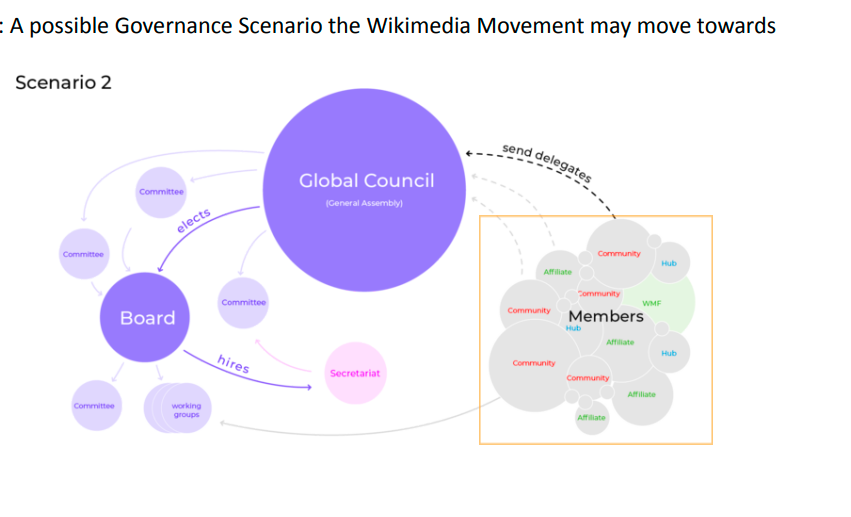
Although Wikimedia began with the spirit of most tech startups—move fast and break things—as it grew beyond the United States and the English-speaking world, this initial mantra became less agile. Sustainable networks, systems, and workflows are necessary to facilitate collaboration across different teams and chapters with clarity regarding decision-making and community participation.
To address the need for change, Wikimedia began drafting its Movement Charter.
The purpose of this [white paper] (https://upload.wikimedia.org/wikipedia/commons/9/92/Designing_the_future_of_participation_in_the_Wikimedia_Movement.pdf) is to provide information for the potential design of participatory processes within the Wikimedia Movement, in connection with the Charter drafting process. The research and recommendations outlined below may be useful for fostering inclusive and accessible community engagement in the Drafting Process, as well as in the ratification of the Charter. Fostering community engagement in participatory governance was a recommendation of the Wikimedia Movement Strategy 2030 and constitutes one of the pillars of the Movement’s long-term strategic direction. This White Paper aims, on the one hand, to make a significant contribution to existing research on the historical background of participation in Wikimedia and, on the other hand, to support the community in the ideation, design, and planning of a participatory process for the drafting of the Movement Charter and, potentially, for other participatory processes within the Movement.
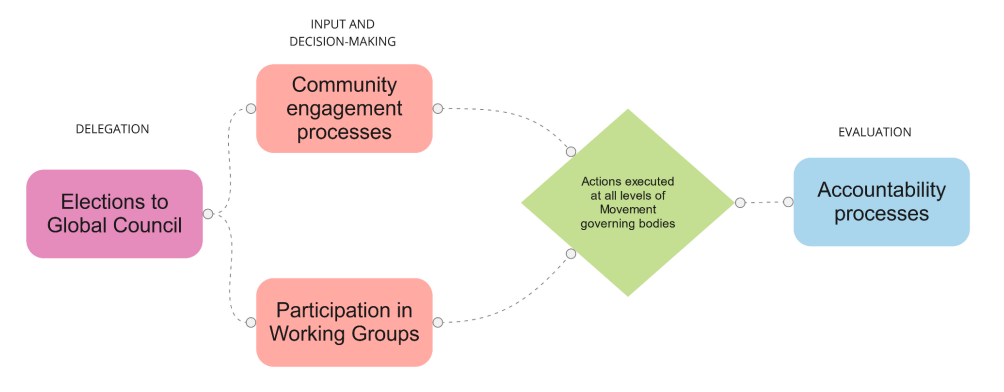
This research has made us aware of the complex and sometimes difficult realities of maintaining an open online movement. However, it has also given us the opportunity to rethink what that means through conversations around the world.
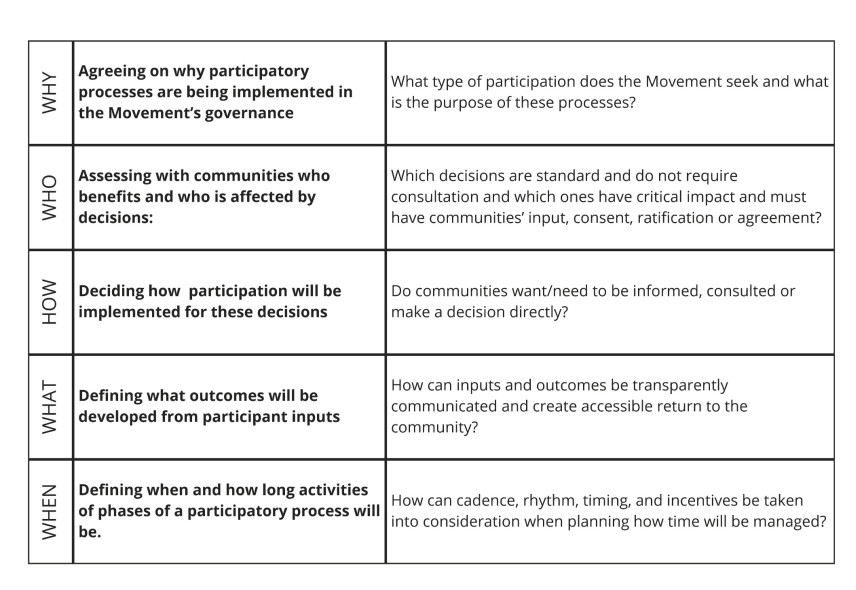
Based on the principles of restorative and transformative design, we focus on the ideas and needs of Wikimedia communities and organizations to make recommendations on how to design a participatory process with those communities and organizations, and which spaces, roles, scales, forms and modes of participation, and decision-making processes can be chosen to promote more inclusive and accessible community engagement.
This white paper offers:
- A historical overview of the current context and participation in Wikimedia governance
- An ethical framework based on Design Justice and the International Charter of Indigenous Design that prioritizes marginalized voices, respects cultural differences, and works toward sustainable, community-led solutions that prioritize impact over design.
- An exploratory analysis of the main issues, challenges, needs, and best practices, drawn from interviews and a focus group with Wikimedians,
- Case studies of transnational organizations and governance processes that have addressed similar issues, including interviews with experts from these organizations,
- Recommendations for next steps, tools, and models for designing a participatory process, and a list of initial steps to promote community engagement.
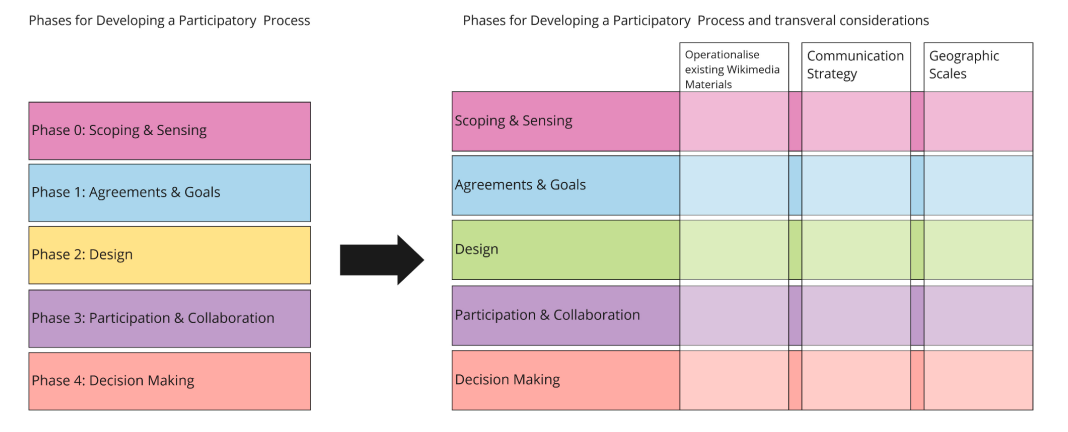
Throughout our research, we have sought to continually challenge the way we think about participation—from scales and methods to affective design and perspectives.
Recognizing that these issues can be complex across geographies, languages, cultures, and politics, we are committed to a vision of lifelong learning in participation that continues to grow and build bridges.
Participatory, transparent, and accountable governance is a fundamental requirement of any open online community. However, the meaning of these concepts is constantly evolving, compelling us to remain engaged and find new ways to inspire best practices so that knowledge and digital public spaces remain accessible and inclusive.
Download the Wikimedia white paper, aquí.
Do you want to support participatory online governance and get involved in open knowledge communities? Let’s get started!