Open Project
Wilder Journal
This Journal you’re holding in your hands is the Platoniq Foundation’s way of opening the doors to our world(s) for you. Welcome!
27/11/2024 - 27/11/2024

Open Project
27/11/2024 - 27/11/2024
At the Platoniq Foundation, we advocate for culture as an alternative to development and as the foundation for social cohesion. That is why we launched the Wilder Journal, focusing on creativity and art as catalysts for democracy.
Culture helps us learn to observe and recognize who should be heard, what is the best way to listen, and how we can communicate more creatively so that our proposals as civil society are heard.
Here you’ll find projects that use legislative theater, shared stories, and data visualization, with young people taking center stage. Also, communities as creators of their own narrative and shapers of a future decided by all.
The Platoniq Foundation has worked extensively to break down barriers in order to promote inclusive and design-based approaches inspired by justice, focusing on deliberative perspective-taking practices to foster empathy through co-creation and creativity. This work also extends to social organizations, where we plan strategy in a participatory manner to bring about desirable futures for the organization and for the world.
Despite the ecological crisis, rising inequality, and the rise of authoritarianism, it is never too late to take the reins and reclaim the future by making decisions collectively.
In order to design the hopeful future we want, we must first be able to imagine it. “Progress is the realization of utopias,” said Oscar Wilde. “Utopia serves as a guide,” added Eduardo Galeano. From here, we affirm the power of this idea and open the doors to other possible worlds. Worlds committed to fostering citizen mobilization through the unifying and catalytic potential of creativity and art.
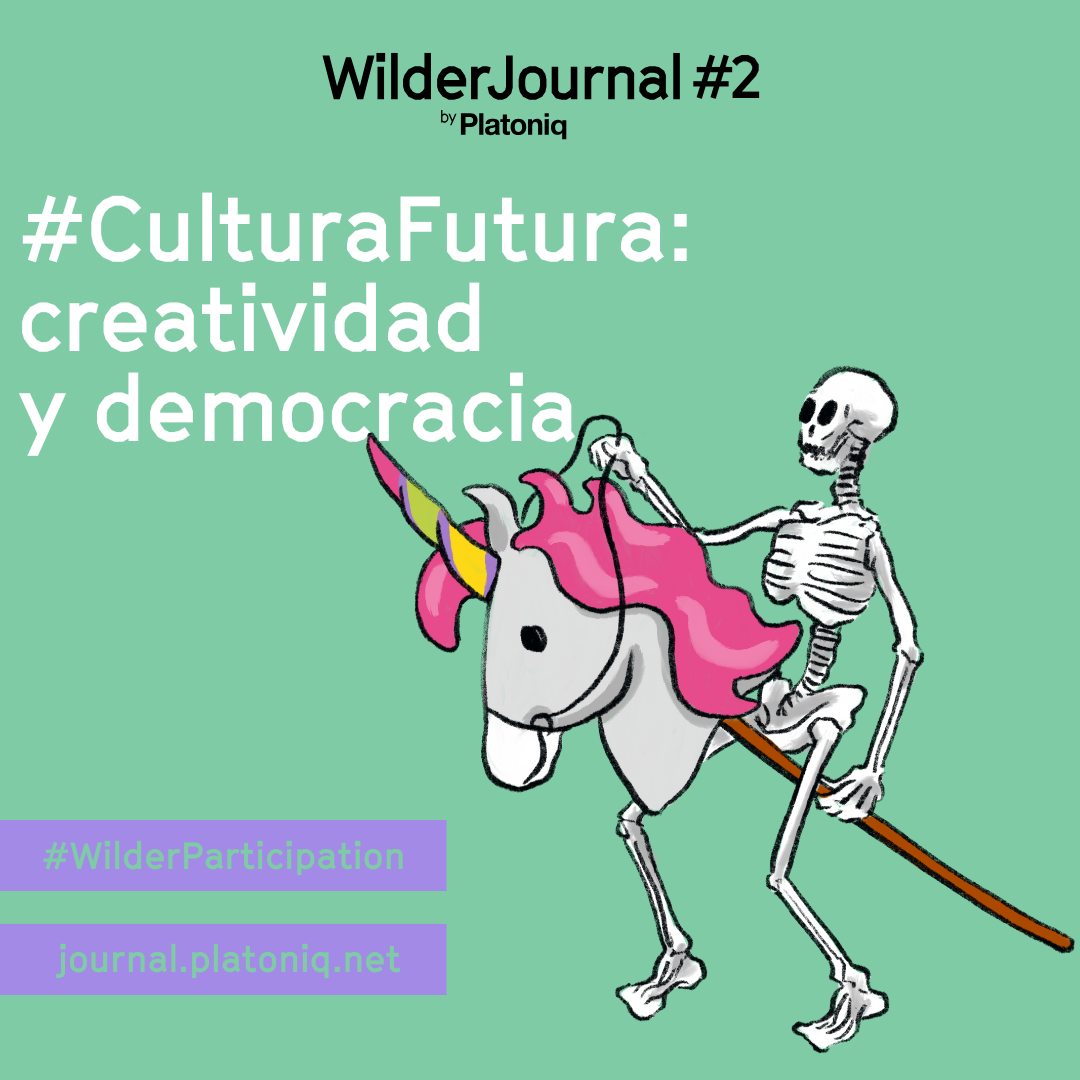
The illustrations accompanying the second issue are by Jean-Louis Vidière Ésèpe, and are conceived as a reinterpretation of a classic genre: les vanités. We draw on these paintings, which evoke the fragility of existence, to acknowledge that our lives are, indeed, fleeting. However, it is within our power to leave a worthy legacy for future generations so that they may continue with their own lives—which are also fragile and finite—but which are worth living.