Share Your Story: Co-Creating Collective Memory Through Public Libraries
"Share Your Story" is the result of a challenge presented to us in late 2015 by the Ministry of Culture, the National Library of Colombia, and the social enterprise Shift. Its goal was to influence the process of reconstructing a country’s collective memory as a methodology for building common ground through everyday life, amidst the armed conflict, in order to achieve peace (which was recently signed).
09/09/2024
- 09/09/2024
On October 4, 2018, the “Comparte tu rollo” project was launched at the 5th National Congress of Public Libraries, “Public Libraries as Settings for Peace,” in Bogotá. The goal was to encourage the development of community-based initiatives focused on the recovery of photographic memory in public libraries, placing them at the center of learning and digital access. They aimed to quickly develop the initiative, select the tools, conduct training and implementation, and then roll it out nationwide.
How did we do it?
The activities had to be simple, relatable, and engaging for a general audience. The work of librarians—in Colombia and around the world—often goes far beyond simply caring for the collection; they contribute to the existing (or latent) intangible heritage in their communities, fostering a “healing” memory. They are active hubs in their communities, typically maintaining a well-established network of relationships with a broad spectrum of users (of various ages and from diverse social backgrounds), and they are key to grassroots (social) work. For a librarian, participating in this project is a way to bring together joint cultural initiatives starting from the grassroots level, taking into account the shared responsibility of the library network and its users.
In Colombia, there was a clear national framework, and the goal was to develop effective public policies, but the task of building this memory was neither easy nor well understood by the general public. Applying the co-creation processes we had been exploring and experimenting with (see “Co-creation in Public Libraries”) allowed us to reduce the time needed to implement and validate the tools that would strengthen this national coordination; to flesh out the ideas and tools to be developed from scratch; identify the needs of the participants (librarians and users); generate a comprehensive set of educational materials for “cascade” training; and integrate all levels of professionals and users into the development of these public policies.
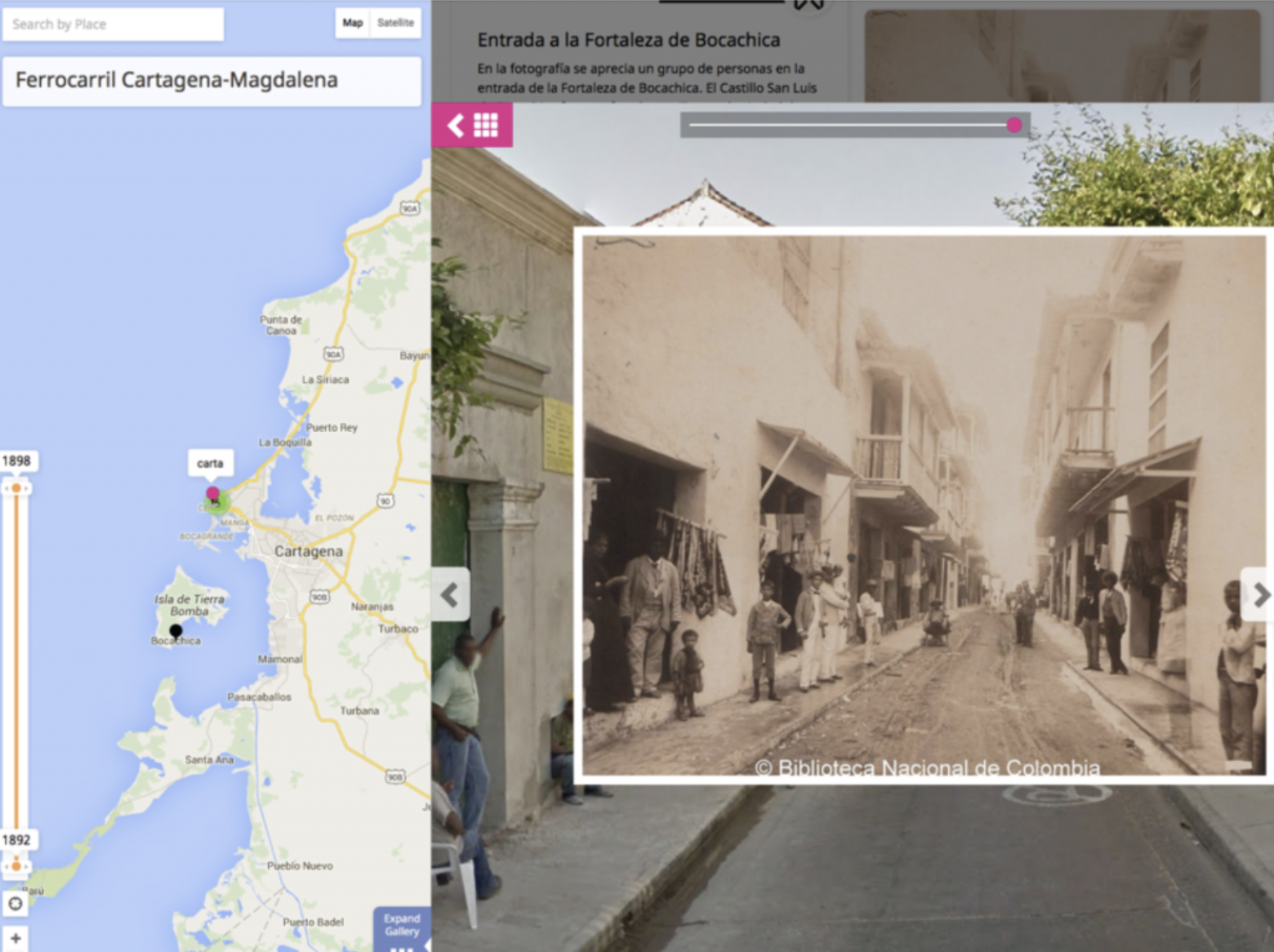
We got right to work. The Historypin platform, the National Library of Colombia, and several members of the National Network of Public Libraries of Colombia participated in the development of the co-creation phase. Together with Platoniq, they designed the methodology to go beyond the library’s walls, connect with the community, and bring the stories of these places to life.
The two-year project is called “Photography and Memory in Public Libraries.” Participants would include the National Library (as the driving force), Colombia’s library network (and all its librarians), HistoryPin as a robust technological platform tested for usability, reliability, and visual appeal, and Platoniq would serve as the facilitator, leading the co-creation sessions and promoting the “open” methodology. The goal would be to promote Internet use and bridge the digital divide in Colombia through activities, exercises, and associated templates, so that librarians and the groups formed around them could serve as facilitators of these activities, fostering dialogue across generations and regions.
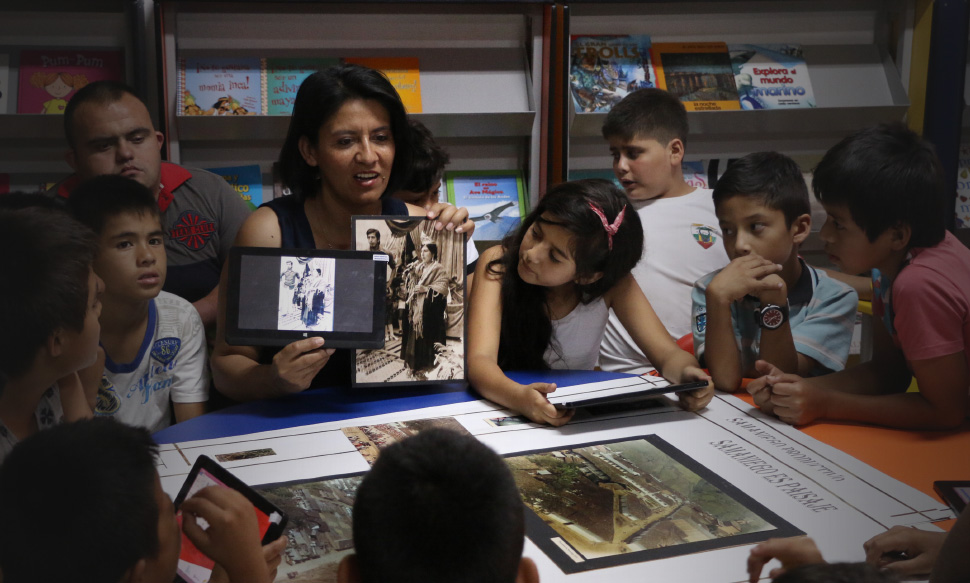
Platoniq led the various activities designed to explore, together with the librarians themselves, which elements are key when discussing memory (first) and photography (second). The libraries would contribute their archives and invite citizens to bring their own photographs, teaching them how to contextualize them, scan them, and helping them upload them to an online database. The HistoryPin methodology had to be adapted to gather content and participants, and the platform was adjusted to use the photographic content as a tool for social interaction aimed at building a collective “history.”
A Common Path with 3 Alternative Routes
The activities and educational materials are part of a path toward the digitization of family and local memories (photos, videos, stories, etc.) and the nation’s heritage (cultural heritage, in short), which will help place public libraries at the epicenter of digital learning for Colombians, as well as project a positive and inspiring image of Colombia to the outside world through the past (by preserving it in digital format) and the present (by providing a space to compare, share opinions, participate, and comment from new perspectives) of their communities.
The shared journey is not just about uploading images to the HistoryPin platform and filling out the standard form, which will ask for a title for the image, a date, a location, and a brief description. If the goal is to recover collective memory, we must also add a layer that represents and visualizes the emotions these materials and activities evoke in the participants and the communities involved. It is not easy to describe what the images evoke in those who keep them alive in their memories, nor in those who view them or compare them to other images from the same era or place. Knowing how to share this, moreover, leaves a distinct and valuable mark, and is more achievable when done within a process of co-creation.
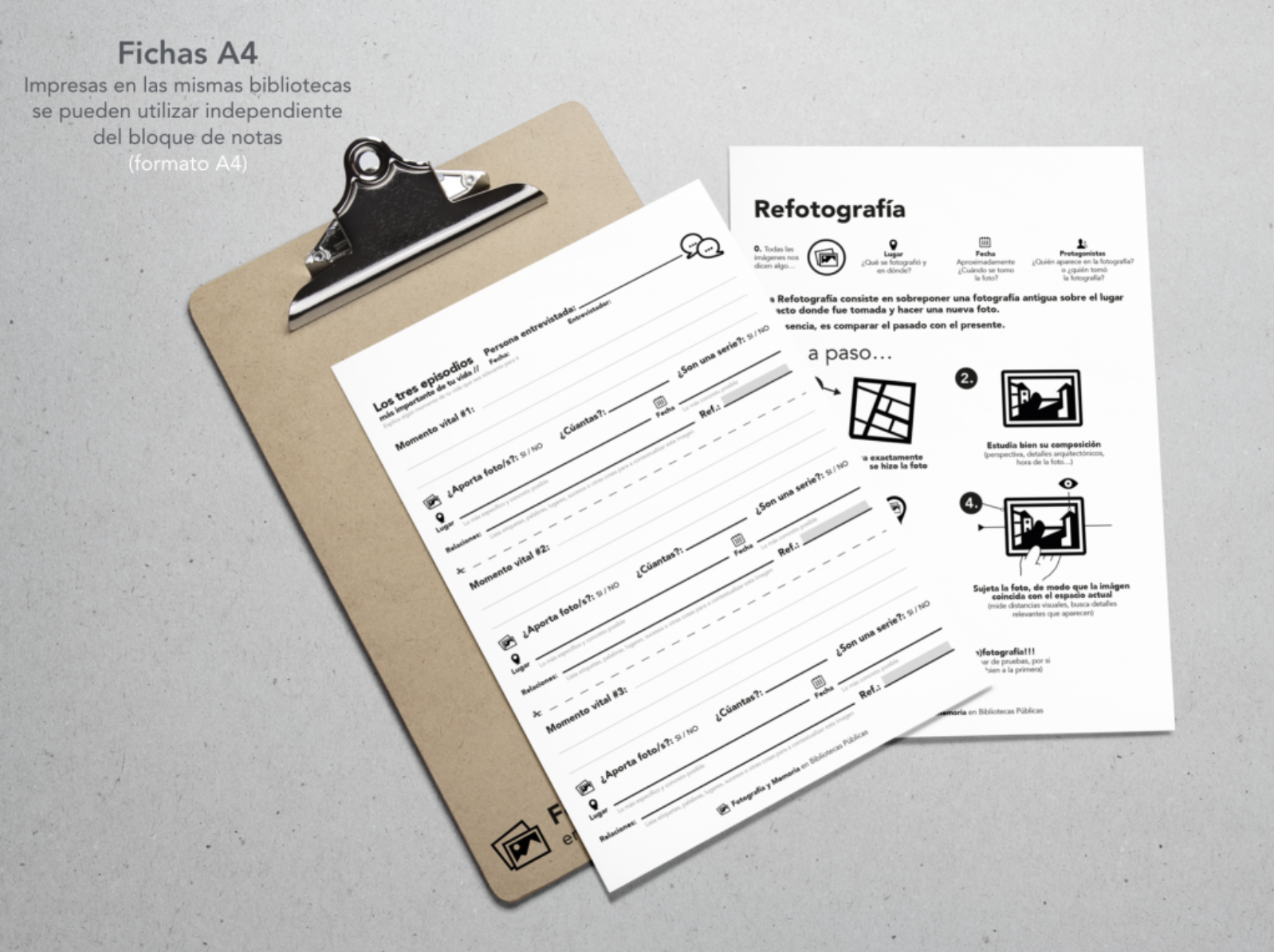
Thus, the creation of the shared route is structured around a practical approach, featuring a series of exercises and activities with the participants. Here, we will highlight two: “Diana,” which serves as the basis for the initial interaction by linking photographs, emotions, and users; and “Refoto,” which connects the temporal context of an old photograph of a place with the present moment when the user visits it.
Results
Contribution to Strengthening Collective Self-Esteem
As a Community Memory project, “Comparte Tu Rollo” developed its methodology and tools to strengthen a community’s collective self-esteem. Despite material poverty, there is a rich cultural foundation that has sustained communities for generations. Recognizing and valuing a people’s culture is an intrinsic part of the formation of their community identities. In the Colombian context, in particular, there is a constitutional mandate for this cultural recognition, and libraries are uniquely positioned to foster community exchange and serve as guardians of history and culture through archives and memories.
Contribution to the Development of Values
Libraries are also part of the community resources that help people identify and recognize their common values and share them across generations through culture, especially those practices that incorporate the broad diversity of society—in this case, Colombian society. A key practice is the promotion of values that foster peaceful and cooperative exchange, solidarity and responsibility, consensus, and tolerance—all of which are part of a broader range of Latin American values.
Contribution to social inclusion:
The collective generation of knowledge, dialogue, and consensus through methodologies chosen for their ability to foster social inclusion and enhance democratization—and, therefore, equality—are also part of the spectrum of capabilities made possible in public libraries.